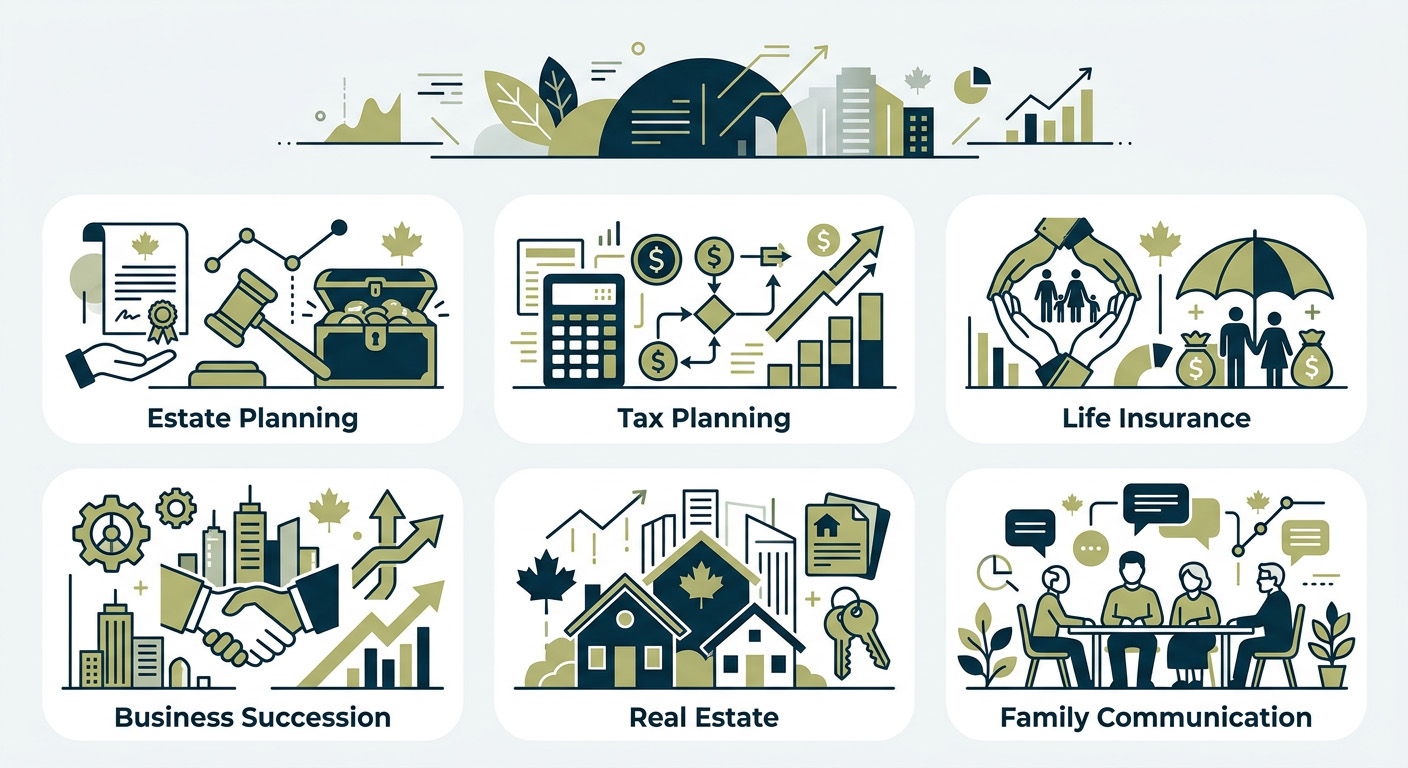

Intergenerational Wealth: Passing the Torch to the Next Generation
Intergenerational wealth is about more than leaving money behind.
For many Canadian families, it means passing on a home, a business, investments, insurance proceeds, family values, and the financial habits that helped build that wealth in the first place.
But transferring wealth to the next generation is not always simple. Without planning, families can face unnecessary taxes, delays, confusion, conflict, and emotional stress during an already difficult time.
The goal is not just to transfer assets. The goal is to transfer wealth with clarity, purpose, and protection.
This article breaks down the key areas families should consider when planning to pass wealth to the next generation.
Intergenerational Wealth Starts With a Clear Plan
Many families avoid wealth transfer conversations because they feel uncomfortable. Parents may not want to talk about death. Children may not want to ask about inheritance. Business owners may delay succession planning because they are still focused on day-to-day operations.
But silence is not a strategy.
A clear intergenerational wealth plan helps answer important questions:
- Who should inherit which assets?
- When should the transfer happen?
- Should wealth be passed during life or after death?
- How will taxes be handled?
- Who will make decisions if someone becomes unable to?
- How will family members be treated fairly?
- What role should life insurance play?
- How will a business, cottage, or investment property be handled?
Without answers to these questions, even a well-built estate can become complicated.
Canada Does Not Have a Direct Inheritance Tax, But Taxes Can Still Apply
One common misconception is that Canada has an inheritance tax. In most cases, beneficiaries do not pay a direct tax simply because they receive an inheritance.
However, that does not mean wealth transfers are tax-free.
Taxes may apply before assets are distributed. For example, when someone passes away, certain assets may be treated as if they were sold immediately before death. This can trigger capital gains tax on investments, real estate, business shares, or other appreciated assets.
Registered accounts can also create tax issues. RRSPs and RRIFs may be taxable to the deceased person’s estate unless they are transferred to a spouse, common-law partner, or another qualified beneficiary under the applicable rules.
The key point is this: there may not be a simple “inheritance tax,” but there can still be a significant tax bill.
The Deemed Disposition Rule Can Surprise Families
In Canada, when a person dies, they are generally considered to have disposed of their capital property immediately before death. This is called a deemed disposition.
That means the estate may have to report capital gains, even though the assets were not actually sold.
This can affect:
- Non-registered investments
- A family cottage
- A rental property
- A second home
- Private company shares
- Certain business assets
- Valuable personal property
For example, if a parent bought a cottage decades ago for $200,000 and it is worth $900,000 at death, the estate may face tax on the capital gain unless planning has been done.
This can create liquidity problems. The family may want to keep the asset, but the estate may still need cash to pay the tax.
That is why wealth transfer planning should look not only at who receives the asset, but also how the tax will be paid.
Real Estate Often Creates the Biggest Family Planning Questions
For many Canadian families, the largest assets are real estate: the family home, a cottage, a rental property, farmland, or an investment property.
Real estate can be emotional and financially complicated.
The family home may qualify for the principal residence exemption, but a second property usually requires more planning. If the family owns both a primary residence and a cottage, choosing which property receives the principal residence exemption can become an important tax decision.
Common real estate planning questions include:
- Should the cottage be kept or sold?
- Do all children want to share ownership?
- Can all children afford the ongoing costs?
- Should one child buy out the others?
- Will capital gains tax apply?
- How will maintenance, insurance, and property taxes be handled?
- Should life insurance be used to cover future tax costs?
A property that feels like a family legacy can become a source of conflict if the plan is unclear.
Business Succession Requires More Than a Will
For business owners, intergenerational wealth planning often includes succession planning.
The question is not only, “Who inherits the business?”
It is also:
- Who is capable of running it?
- Who wants to be involved?
- Should ownership and management be separated?
- What happens to children who are not active in the business?
- How will the business be valued?
- Will shares be transferred, sold, frozen, or reorganized?
- How will tax be managed?
- How will key employees, clients, and partners be protected?
A business can represent decades of work. Without a succession plan, the next generation may inherit responsibility before they are ready.
A proper business succession strategy may involve accountants, lawyers, financial planners, insurance advisors, and family members working together.
Life Insurance Can Help Create Liquidity
One of the biggest challenges in wealth transfer is liquidity.
An estate may be valuable on paper but short on cash. That can become a problem if taxes, probate costs, debts, or equalization payments need to be paid.
Life insurance can help by creating tax-free proceeds that may be used to:
- Pay tax liabilities
- Cover estate costs
- Equalize inheritances between children
- Protect a family business
- Allow heirs to keep a cottage or investment property
- Provide income replacement for dependants
- Support charitable giving
For example, one child may inherit a family business while another receives investment assets. Life insurance can help balance the inheritance without forcing the sale of the business.
The right insurance strategy depends on the family’s goals, assets, age, health, and overall estate plan.
Equal Is Not Always the Same as Fair
A major challenge in intergenerational wealth planning is fairness.
Many parents want to treat children equally. But equal distribution is not always practical.
One child may work in the family business. Another may not. One child may want to keep the cottage. Another may prefer cash. One child may have received financial help earlier in life. Another may have different needs or responsibilities.
Fairness may require more thoughtful planning than simply dividing everything into equal shares.
Questions to consider include:
- Should gifts during life be counted against future inheritance?
- Should a business-active child receive different assets than non-active children?
- Should the family cottage be shared, sold, or transferred to one person?
- Should trusts be used for younger or vulnerable beneficiaries?
- Should inheritances be protected from creditor, relationship, or spending risks?
The more complex the family situation, the more important it is to document the intention behind the plan.
Communication Can Prevent Conflict
Many estate disputes happen because family members are surprised.
They did not understand why the will was written a certain way. They did not know who was named executor. They assumed an asset would be handled differently. They expected equality, but the plan was based on fairness.
Not every detail needs to be shared with every person. But in many cases, some level of communication can reduce confusion later.
Useful family conversations may include:
- Who the executor is and why
- What the broad estate plan is designed to accomplish
- Whether a cottage, business, or property will be sold or kept
- What responsibilities come with shared assets
- How insurance fits into the plan
- What values the family wants to preserve
Intergenerational wealth transfer is both financial and emotional. Communication helps connect the two.
Wealth Transfer Is Also About Financial Education
Passing wealth to the next generation is not only about legal documents and tax planning.
It is also about preparation.
If children or heirs are not prepared to manage money, an inheritance can disappear quickly or create stress.
Families can prepare the next generation by discussing:
- Budgeting and cash flow
- Investing basics
- Tax awareness
- Debt management
- Property ownership responsibilities
- Charitable giving
- Business ownership
- Insurance and risk management
- Long-term planning
The goal is not to control the next generation. The goal is to equip them.
A strong wealth transfer plan gives heirs both resources and responsibility.
Important Documents to Review
A complete intergenerational wealth plan usually involves more than a will.
Families may need to review:
- Wills
- Powers of attorney
- Health care directives
- Beneficiary designations
- Life insurance policies
- Shareholder agreements
- Trust documents
- Marriage contracts or cohabitation agreements
- Corporate records
- Tax planning documents
- Property ownership records
These documents should work together. If they conflict, the estate may become harder to administer.
For example, a will may say one thing, but a registered account beneficiary designation may direct the asset somewhere else. That can create confusion and unintended results.
When Should You Start Intergenerational Wealth Planning?
The best time to start is before there is urgency.
You do not need to be elderly or ultra-wealthy to benefit from planning. Families should consider wealth transfer planning when they:
- Own a home or second property
- Have children or dependants
- Own a business
- Have significant registered or non-registered investments
- Have life insurance
- Support aging parents
- Want to leave money to charity
- Have a blended family
- Want to reduce conflict or confusion
- Want to protect family wealth over time
Planning early gives families more options.
Final Thought
Intergenerational wealth is not just about what you leave behind.
It is about how you prepare the next generation to receive it, manage it, and build on it.
The right plan can reduce tax surprises, protect important assets, preserve family relationships, and create clarity during a difficult time.
Whether your family is planning around a home, investments, a cottage, a business, or insurance, the conversation is worth starting now.
Schwartzman Financial Group helps families think through wealth transfer, tax planning, insurance, and long-term financial strategy with clarity and care.
Passing the torch is easier when everyone understands the plan.